Ligurian cuisine has three very clear traits: an intelligent use of humble ingredients (wild herbs, fresh cheeses, oily fish, flours), a very strong bond with the extra-virgin olive oil of the Riviera (Taggiasca cultivar above all) and an executive simplicity that leaves no room for errors. In Portofino and the Tigullio you eat the traditional Ligurian dishes, with some local variations; to recognise the right dishes and order consciously, this page summarises the specialities to try.
Genoese focaccia: the fugassa
The Genoese focaccia (in dialect fugassa) is the best-known flatbread of the region: around 2 cm high, with characteristic dimples on the surface filled with oil and flaky salt, baked in a hot oven. The oil-and-salt brine is the difference: a well-made focaccia crackles on top and stays soft underneath. It is eaten at breakfast (dunked in cappuccino, a Genoese habit), as a mid-morning snack, as an accompaniment to prosciutto crudo.
An important local variant is the Recco focaccia with cheese: thin, two unleavened pastry layers enclosing fresh crescenza cheese, quickly cooked at high temperature. It is a PGI product (Protected Geographical Indication) and should be eaten piping hot. For the history of this speciality see the entry Focaccia di Recco on Wikipedia.
Pesto alla genovese and trofie
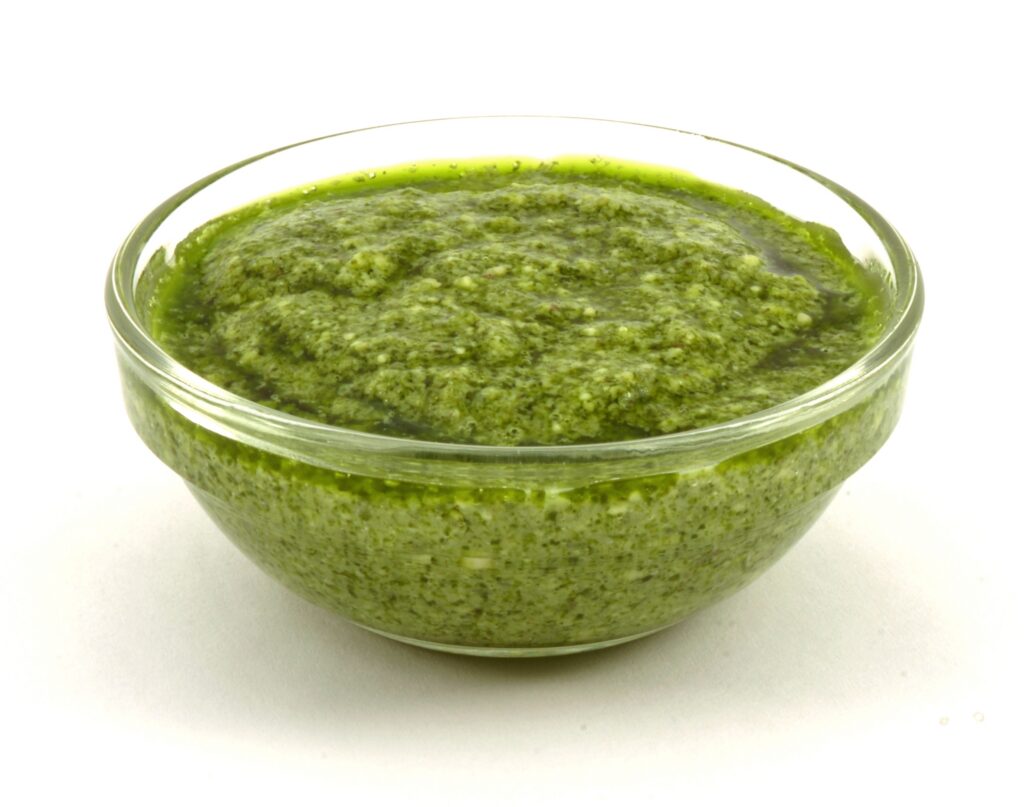
Traditional pesto alla genovese is made with seven ingredients: Genoese DOP basil, pine nuts, garlic (from Vessalico or local variants), coarse salt, aged Parmigiano Reggiano, Sardinian Pecorino (or Fiore Sardo) and Ligurian extra-virgin olive oil. The preparation uses a marble mortar and a wooden pestle; in everyday practice many restaurants use a blender, but in a true pestaiola you can taste the difference.
The typical pasta paired with it is trofie, short, twisted dumplings of durum wheat flour and water, originating in the Tigullio. They are often served with potatoes and green beans boiled together with the pasta (the classic Ligurian combination). Other pastas suited to pesto are linguine, trenette and mandilli de saea (thin lasagne sheets).
Pansoti with walnut sauce
Pansoti (in other spellings pansotti, pansotti tigulliesi) are triangular ravioli filled with preboggiùn, a mix of wild herbs typical of the Tigullio (borage, sowthistle, nettle, chervil, in varying proportions) and ricotta. They are served with walnut sauce: paste of crushed walnuts, breadcrumb soaked in milk, garlic, cheese, oil. It is a winter dish by origin but today available all year in local restaurants.
Cima alla genovese
Cima alla genovese is a complex cold meat dish: a pocket of veal stuffed with eggs, cheese, pine nuts, peas, sweetbreads and herbs, cooked in broth. It is served in thin slices, cold, as a starter or main course. It is one of the festive dishes and today not all trattorias have it; when it appears on the menu it is worth a try.
Stuffed anchovies and other fish mains
The stuffed anchovies are a classic of Ligurian seafood cooking: fresh anchovies opened butterfly-style, filled with a mix of bread, eggs, herbs and cheese, fried or baked. Other traditional fish dishes: buridda (fish stew with stockfish, Taggiasca olives, pine nuts), cappon magro (baroque cold salad of fish, vegetables and sailors’ biscuits, a festive dish), seppie in zimino (cuttlefish with chard), polpo alla genovese. The fish is often from the Tigullio (anchovies, sardines, mackerel, humble fish).
On the sustainability of local catch and the typical species see also the website of the Portofino Marine Protected Area, which for years has been promoting artisanal sustainable fishing projects.
Wines
Liguria is a small region by wine volume but with distinctive denominations. Near the Tigullio the reference wines are:
- Golfo del Tigullio-Portofino DOC: whites based on Vermentino or Bianchetta Genovese, reds from Ciliegiolo. Crisp, savoury vertical lines, ideal with fish.
- Colli di Luni DOC: from eastern Liguria, structured Vermentino whites.
- Cinque Terre DOC: whites from the eastern Ligurian Riviera, dry and mineral.
- Sciacchetrà: sweet passito wine of the Cinque Terre, made from air-dried white grapes. Served with desserts or, unorthodox but apt, with Sardinian pecorino.
- Rossese di Dolceacqua DOC: from western Liguria, the only real historic red of the region.
DOP and IGP products to taste
- Genoese DOP Basil: the small-leaved, non-minty cultivar.
- Riviera Ligure DOP Extra-Virgin Olive Oil: in the sub-zones Riviera di Levante (ours), Riviera di Ponente and Colline di Genova.
- Acciughe sotto sale del Mar Ligure IGP (salted anchovies of the Ligurian Sea).
- Focaccia di Recco col formaggio IGP.
- Mostarda di Albenga: traditional preserve from western Liguria, based on quinces and other fruit, paired with cheeses.
Where to eat: general indications
In Portofino village restaurants are few and in the high bracket: long-standing trattorias on the Piazzetta, hotel restaurants. Prices are clearly above the regional average. For a traditional meal at more contained prices, consider the trattorias of Santa Margherita Ligure (old harbour area and Via Roma), Camogli (seafront and historic centre) or Recco for the cheese focaccia (15 km from Portofino, reachable by train). For those staying inland, the agriturismi in the hills offer home-style cooking: see the where to stay page for indications on the Tigullio inland.
Seasonality and pairings
Ligurian cuisine follows precise seasons: pansoti and cima in winter and at festivities, anchovies and oily fish from May to September, focaccia all year, fruit from the inland (Volpedo peaches, plums) in summer. For anyone visiting the Portofino regional park in spring, the preboggiùn of wild herbs is at its best: some inland trattorias offer ravioli with locally gathered wild herbs.
Desserts and end of meal
On the sweet front Ligurian gastronomy is less known but has some specialities worth seeking out:
- Pandolce genovese: festive cake, sweet bread rich in candied fruit, pine nuts, raisins, fennel seeds. “Tall” version (leavened, old style) and “low” (more modern).
- Canestrelli: crumbly flower-shaped biscuits with a central hole, from inland Liguria (particularly the torriglino, from Torriglia).
- Baci di Alassio: two discs of hazelnut paste with chocolate in between, from western Liguria.
- Latte dolce fritto: small squares of set cream, breaded and fried, served warm with icing sugar.
Markets and shops
To take home something of the Ligurian specialities we recommend the weekly markets of the Tigullio: Thursday morning in Santa Margherita Ligure, Friday in Rapallo, Saturday in Camogli, Tuesday in Recco. They sell local products (oil, Taggiasca olives, fresh pesto, cheeses, cured meats) at fairer prices than the tourist shops in the centre. For fresh pesto the historic pestaiole of central Genoa are the reference, but some shops in Santa Margherita and Camogli also produce daily pesto for consumption within 24 hours.
For those after a more structured experience, in the Tigullio there are several cookery schools and pesto-in-mortar workshops aimed at visitors, with 2-3 hour sessions where you learn the technique and have lunch with what you have prepared. These activities concentrate from April to October, generally to be booked a few days in advance.
Practical etiquette at the restaurant
- The cover charge (coperto) is the norm in Liguria: a small fixed item on the bill (1-3 euros per person) covering bread and service. Not to be confused with the tip, which is optional.
- Mineral water: in Portofino and the Tigullio you pay for it, and in tourist venues prices can be high. Asking for tap water is rare but not forbidden; some trattorias serve it on request.
- Pizza is available but is not a local speciality: for authentic Ligurian seafood cooking it is better to ask for the dish of the day or for advice from the waiter.
- Portions of pesto pasta are generous; consider sharing or ordering a half portion.