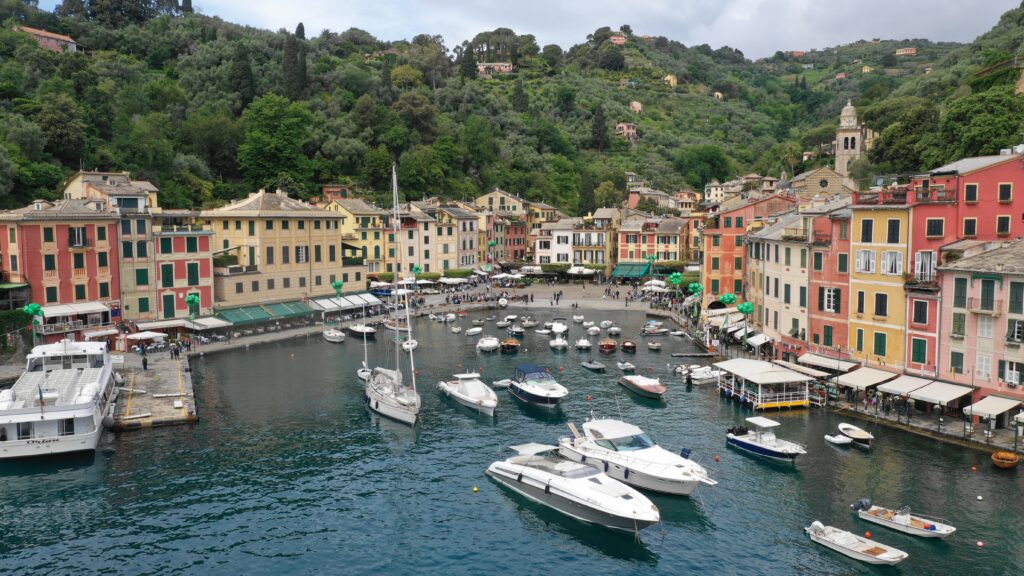
Portofino is one of the most photographed villages in Italy, but beneath the pink and ochre houses reflected in the water there is much more than a piazzetta. It is worth looking more closely. The headland is protected by the Portofino Regional Natural Park and its associated Marine Protected Area, and around the village opens the Riviera del Tigullio, from Camogli to Rapallo via Santa Margherita Ligure. This Portofino travel guide is conceived as an independent reference for anyone planning two, three or four days in the area: no bookings, no affiliations with individual hotels, only verified information and links to official sources. Our Portofino travel guide is written in British English for the international traveller, with an Italian version also available.
We are not the Park Authority. The body that manages the park is and remains the Parco Naturale Regionale di Portofino, which publishes regulations, official maps and notices on path closures. We gather the practical information — transport, opening times, routes, choice of accommodation — and refer to the competent sources for any binding decision.
What you will find below
The guide is divided into six thematic sections, designed to be read in the order in which a trip is usually organised.
- Portofino Regional Natural Park — the thirteen kilometres of official paths, the Mediterranean scrub, the Marine Protected Area and the rules for access to the headland.
- What to see in Portofino — the Piazzetta, Castello Brown, the Church of San Giorgio, the Lighthouse and the walk out to Punta del Capo.
- San Fruttuoso Abbey — the Romanesque-Gothic complex reachable only on foot or by sea, today managed by FAI, and the Christ of the Abyss statue submerged in the bay.
- Where to stay — from the five-star hotels in the village to the hotels of Santa Margherita Ligure, the agriturismi up in the hills and the B&Bs of Camogli and Rapallo.
- How to get there — Genoa airport, train to Santa Margherita Ligure, ATP bus 82, ferries from Camogli and Rapallo, restricted-traffic zones (ZTL) and parking.
- Ligurian cuisine — Genoese focaccia, trofie al pesto, pansoti with walnut sauce, cima ripiena and the wines of the coast.
Why Portofino differs from the rest of the Riviera
The village is small: around 400 residents, a single square facing the harbour, a few hundred metres of quayside. What sets it apart is the setting: Portofino sits on a headland covered in Aleppo pines, holm oaks and Mediterranean scrub, with cliffs dropping sheer to the sea and coves accessible only by path or boat. The combination of historic village and protected natural area makes the experience different from Camogli or Sestri Levante, where the village is larger and less sheltered.
The village belongs administratively to the Metropolitan City of Genoa. Historically a fishermen’s port, then a naval base, then a stop on the international tourism circuit from the 1950s onwards, its piazzetta has hosted directors, writers and heads of state. Today it lives with this legacy: small and busy, and precisely for this reason demanding careful planning. Better to know before arriving.
When to go
The season is long but not uniform. May and June are the most balanced months: the Mediterranean scrub is in flower, temperatures sit between 18 and 24 degrees Celsius, the park paths are fully walkable and the ferries operate at full schedule. July and August bring settled sun but also peak crowds, queues at the ferry and accommodation prices at their highest. September and the first half of October return mild temperatures, sea still warm and fewer visitors. From November to March many restaurants close and some ferries reduce their crossings: it is an interesting period for those seeking quiet on the headland, less suitable for anyone wanting harbour life.
How much time to dedicate
One day is enough to see Portofino village, walk up to Castello Brown and take the path to the lighthouse. Two to three days allow you to add an excursion to San Fruttuoso (by ferry from Camogli or on the path), a day on the park itself and an afternoon in Santa Margherita Ligure or Camogli. Four days or more open up the eastern Tigullio (Rapallo, Chiavari, Sestri Levante) and the Cinque Terre.
Things to know before leaving
- The historic centre of Portofino is a ZTL (restricted-traffic zone): access by car is limited and strongly discouraged. The shuttle and ATP bus 82 from Santa Margherita Ligure are the most practical solution.
- The park paths require light trekking kit: shoes with a moulded sole, water, a hat. The easier paths are well signposted but not trivial, especially after rainfall.
- San Fruttuoso Abbey is reachable only on foot or by sea. Opening times change with the season: check the current schedule on the FAI website before setting off.
- Prices in Portofino village are higher than in the rest of Liguria. Staying in Santa Margherita Ligure or Camogli and using it as a base is a common and sensible choice.